


Press Release
SPF's Response to Scottish Budget 2026-2027
Today's Scottish Budget offers some welcome specific support for retail, hospitality, and leisure ratepayers in light of this April’s business rates revaluation, and provides phased increases for other ratepayers. There is also welcome stability on the rates and thresholds for the Land and Buildings Transaction Tax (LBTT). However, for the real estate sector the challenges of development viability will remain largely untouched by today’s budget statement and without the economic uplift achieved by investment in our urban centres we remain concerned that Scotland’s growth will continue to stagnate.
Furthermore, investors will be particularly disappointed that the Reserved Investor Fund LBTT relief has not yet been delivered, despite extensive engagement with experts seeking a level playing field with the rest of the UK. Though we do welcome the boost in investment for the affordable housing budget and for targeted infrastructure support for city growth projects. Overall, it will be important for the Scottish Government to work closely with UK and local government partners to maximise the benefits of regional and city growth deals.
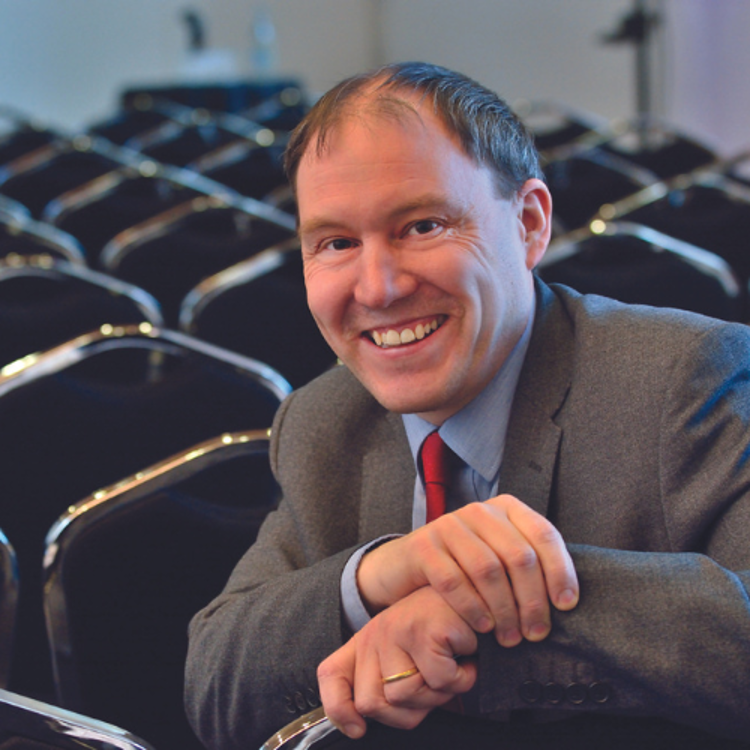
- Name
- David Melhuish
- Job Role
- SPF Director
SPF's Budget Analysis View the Scottish Government's Spending Priorities Below
Key Announcements
Key Announcements
Land and Buildings Transaction Tax (LBTT)
Land and Buildings Transaction Tax (LBTT)
Tax and rates remain unchanged, which will be welcome news for many following repeated increases to the Additional Dwelling Supplement (ADS) in recent years. It is disappointing that progress on amending LBTT policy for Reserved Investor Funds and Seeding Relief is paused until after the election, despite the extensive detail and expertise shared with officials during recent consultations. We hope to see these issues addressed as quickly as possible post-May. In the meantime, we welcome the introduction of relief for investors participating in co-ownership Authorised Contractual Schemes, which will take effect from April 2026.
LBTT policy and regulations for both non-residential and residential property transactions remain under review. The Scottish Government is exploring options for the incoming administration post-May, including potential reform for exceptional circumstances in ADS and for non-residential leases.
Housing
Housing
The Scottish Government reaffirmed its commitment to delivering affordable housing with £4.9bn allocated to affordable housing over the spending review period, including £4.1bn from public investment.
£926m has been set aside this year for the Affordable Housing Supply Programme, supported by plans to work with the Scottish National Investment Bank (SNIB) to leverage further private capital.
A £1.3m allocation to the Scottish Empty Homes Partnership aims to return vacant properties to use, while £335m for heat in buildings programmes underlines the continuing drive to decarbonise Scotland’s housing stock.
Infrastructure
Infrastructure
The Scottish Budget introduces some key infrastructure announcements including a commitment to deliver Winchburgh station this year.
Key Spending Allocations:
-
£93m capital and financial transactions funding to build Offshore Wind infrastructure and develop the supply chain.
-
£8m to support for sector-specific needs in supporting delivery of offshore wind programme including new skills action plan
-
£9m from UKGov will support in upskilling of oil and gas sector worker – with multi-year funding
-
£215m for City and Regional Growth Deal
-
£200 million for the A9 dualling programme
-
£7.6 billion across capital projects in Scotland
-
£15.6 million targeted investment in the Grangemouth Industrial Cluster Strategy
-
12.4m for regional transportation partnership
Non-Domestic Rates
Non-Domestic Rates
Better news for the retail, hospitality and leisure sectors in particular. They will receive specific targeted rates relief which will total some £36m for 37,000 eligible businesses in 2026-27. Ratepayers in this sector based in the islands and specified remote areas such as Cape Wrath will receive further revaluation relief of 100% capped at £110,000 per business. This is provided through a Revaluation Transitional Relief of up to a 15% discount for the Retail, Hospitality and Leisure (RHL) sector for the duration of the revaluation and subject to individual business eligibility.
There is also a broader revaluation transitional relief for small, medium and large ratepayers to phase in uplifts in NDR Bills over the three-year period.
Year-on-year Revaluation Transitional Relief caps (%), 2026-27 to 2028-29
|
|
2026-27 |
2027-28 |
2028-29 |
|
Small (rateable value up to £20,000) |
15% |
22% |
38% |
|
Medium (rateable value £20,001 to £100,000) |
30% |
44% |
75% |
|
Large (rateable value over £100,000) |
50% |
75% |
113% |
The Small Business Bonus Scheme is also retained. For new commercial development the Business Growth Accelerator is retained which supports new development although we continue to believe improvements are needed to support redevelopment.
Scottish Building Safety Levy
Scottish Building Safety Levy
The Scottish Government reasserted its commitment to introduce the Scottish Building Safety Levy which will apply to all new residential developments by 1 April 2028. The funding will be used to support the Scottish Government’s Cladding Remediation Programme.
The Budget reaffirmed that indicative rates for the levy will be published in June 2026. The budget also commits £60.6m for cladding remediation in 2026-27.
Scottish Income Tax
Scottish Income Tax
The Scottish Government proposed to increase the basic and intermediate income tax Threshold by 7.4%. Looking into the finer details, the upper threshold for the Intermediate rate remains unchanged, with income up to £43,662 still taxed at 21%.
The Higher, Advanced and Top rate Thresholds will be maintained at the current rates.
It is expected that Income Tax will raise £21,508m in 2026-2027.
New Income Tax Bands (2026-2027)
|
Band |
Income Range |
Rate |
|
Starter rate |
£12,570 - £16,537 |
19% |
|
Basic rate |
£16,538 - £29,526 |
20% |
|
Intermediate rate |
£29,527 - £43,662 |
21% |
|
Higher rate |
£43,663 - £75,000 |
42% |
|
Advanced rate |
£75,001 - £125,140 |
45% |
|
Top rate |
Over £125,140 |
48% |
Scottish Council Tax
Scottish Council Tax
The Scottish Government have proposed to introduce two new high value council tax bands from 1 April 2028. The bands will apply to homes based on up-to-date values, with all other residential properties remaining on the existing valuation framework.
-
Band I for properties valued between £1 million and £2 million; and
-
Band J for properties valued above £2 million.
The Government reported that this change would affect less than 1% of households.
Future New Taxes
Future New Taxes
The Scottish Government continues to consider the potential for a Carbon Land Tax and has commissioned work from the Scottish Land Commission. We expect to hear more on this at a meeting of our Tax Committee on Thursday 15 January. What is confirmed is that there will be an Air Departure Tax which will include a specific additional tax for Private Jets.
Beyond these proposals, the Scottish Government notes a growing international discussion on the balance between ‘labour’ taxation – such as income tax, and wealth taxation, including land and property. The Scottish Government intends to explore further what a wealth tax could look like in Scotland, although with time short between now and May, this is not likely to become clear until after the Scottish elections.
Interested in our key priorities for the new government?
Check out our manifesto below.